
MAX AI

For organizations

Give your people private companion support without employee monitoring.

MAX gives adults a private place to talk through hard moments, reflect, reset, and find one next step. For organizations, sponsored access creates a humane support option that sits beside existing resources without giving the organization individual conversations or identifiable activity.

The right conversion here is a fit conversation, not a demo promise or intake form.

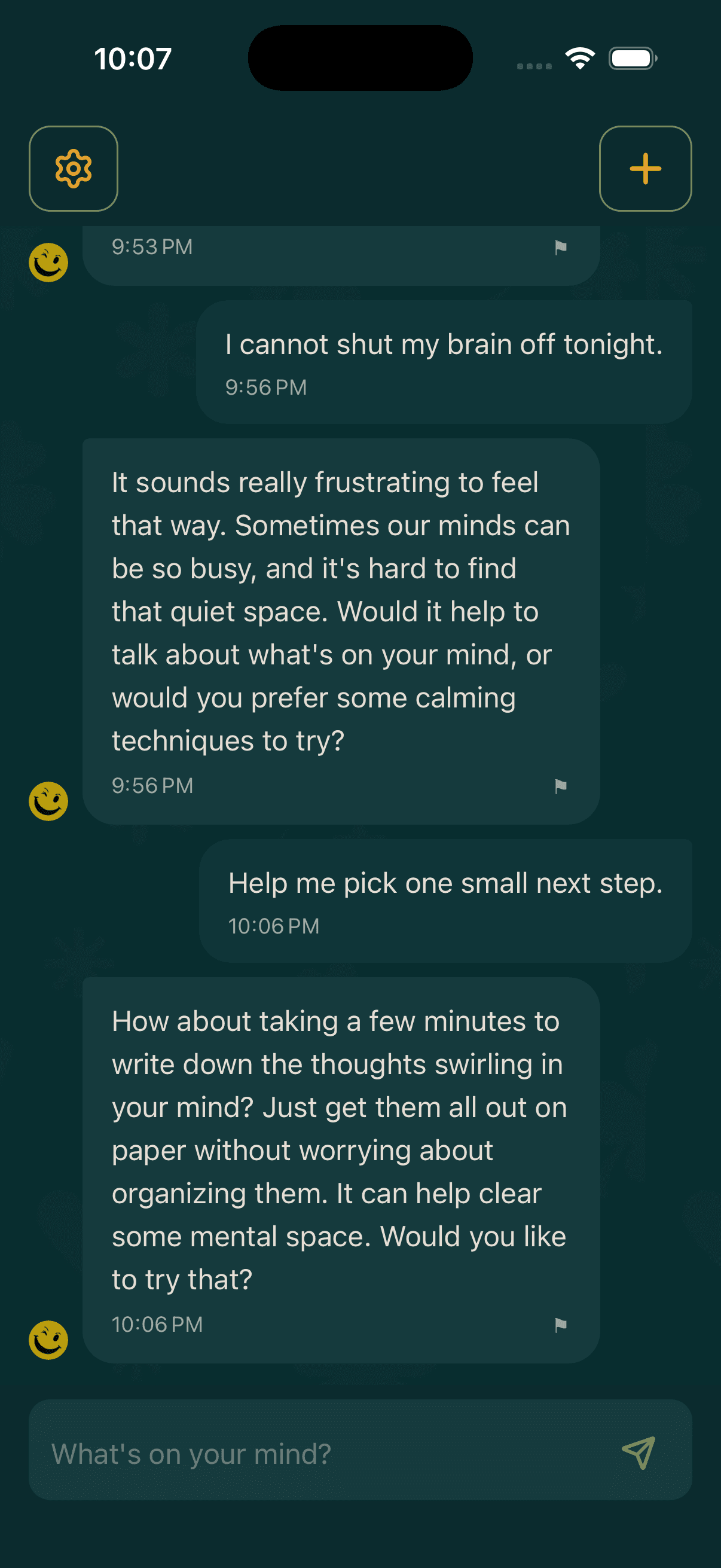
MAX AI Companion app screen showing a text conversation and memory-aware reflection.

No employee monitoring

No identifiable activity detail

Inquiry-only contact path

Sponsored access inquiry

A low-risk first conversation for teams that want to support people without crossing privacy lines.

This page gives HR, benefits, legal, privacy, student-support, and community leaders a clear view of the value: adults get optional private support, and the organization gets a boundary-safe way to offer help beside existing resources.

01 / Sponsored access

For organizations that want to support people without becoming a monitoring layer.

MAX may be relevant when you want to give adults another private place to turn, while keeping managers, HR, program teams, and sponsors outside individual use.

  • Your people get an optional private companion for reflection, grounding, and one clearer next step.
  • Your organization can offer support beside existing resources without reading conversations or tracking individuals.
  • Leaders can keep the message simple: optional, private, adult support with clear boundaries.

02 / Privacy boundary

Private use comes before sponsorship.

An organization can ask about making MAX available, but sponsorship does not create access to individual conversations, saved memory, crisis indicators, wellness scores, or identifiable activity.

03 / Companion role

A companion resource that gives your support model a clearer lane.

The organizational value is a private support option adults can choose for themselves. This page is only a careful contact path. It does not announce a managed pilot, self-serve business product, organization administration capability, therapy program, EAP replacement, or crisis response service.

Buyer confidence

Enough structure for a first internal conversation.

A sponsor should be able to describe MAX plainly: what people receive, how access stays private, and where existing support paths remain separate.

Good fit / not a fit

Good fit if you want private support, not organization visibility.

MAX is worth an inquiry when the goal is optional adult support beside existing paths, not a new way to observe individual use.

  • Good fit if people need a private place to reflect before involving formal support.
  • Good fit if leaders want a simple, consent-respecting support message.
  • Not a fit if the organization needs individual use visibility, manager access, or person-level evaluation.

First inquiry

The first conversation should answer the internal approval questions.

The inquiry can clarify fit without collecting sensitive details or treating sponsored access as already available.

  • Who the adult-serving audience is and what private support gap they are trying to address.
  • How people would learn about MAX without pressure, monitoring, or manager involvement.
  • Which privacy, safety, support, and ownership boundaries need to be understood before any next step.

Bring back internally

A plain internal summary, not a personal-data story.

After an inquiry, a sponsor should be able to explain fit, boundaries, and next-step options without sharing individual issues.

  • What MAX is: optional private companion support for adults.
  • What MAX is not: therapy, EAP replacement, crisis response, employee monitoring, or organization visibility.
  • What needs review next: audience fit, communication boundaries, support ownership, and appropriate next-step fit.

Understanding value

Value is evaluated through fit and trust, not individual tracking.

The safest early question is whether MAX is useful as a private support option and understandable inside the organization, not whether individuals can be watched.

  • Look for a clear audience, clear support gap, and a responsible communication path.
  • Keep feedback high-level and non-identifying; do not ask people to disclose private use.
  • Treat privacy, optionality, and boundary clarity as part of the value.

Privacy boundary

Private use comes before sponsorship.

An organization can ask about making MAX available, but sponsorship does not create access to individual conversations, saved memory, crisis indicators, wellness scores, or identifiable activity.

  • Conversation content stays between the individual and MAX according to the current privacy model.
  • Saved memory and profile context are not made available to the sponsoring organization.
  • The inquiry path should stay general and should not include employee issues, health details, or personal circumstances.

What organizations never see

No individual conversation visibility.

The boundary is simple: organizations do not receive private conversation content or person-level MAX activity.

  • No raw message content or conversation transcripts.
  • No saved memory, profile context, user IDs, or account-level activity.
  • No crisis indicators, wellness scores, personal wellbeing labels, or identifiable usage detail.

Organization questions

Questions organizations usually ask before a fit conversation.

Who is this organization inquiry path for?
It is for adult-serving organizations that want to ask whether MAX could give their people an optional private companion resource without giving the organization access to individual use.
How does MAX sit beside EAP or existing benefits?
MAX is positioned beside existing support options as a private companion for reflection, grounding, and next-step thinking. It is not a replacement for therapy, clinical care, EAP, HR, crisis, or emergency support.
What happens after an organization inquiry?
The inquiry can clarify audience fit, how people would learn about MAX, privacy expectations, support boundaries, owner responsibilities, and appropriate next steps. The message should stay general and should not include individual issues or sensitive personal details.
Can organizations see what people say to MAX?
No. Organizations that sponsor or share access must not receive individual conversations, memory or profile data, user IDs, emails, or identifiable activity.

Contact

Start a sponsored access inquiry.

Send a general description of your organization and adult-serving audience. Do not send employee issues, health details, personal circumstances, or individual wellness information.

What an inquiry can cover

Start with the value you want for your people, then test fit and boundaries.

  1. 1What kind of private support your adult-serving audience needs.
  2. 2How people would learn about the resource without pressure or monitoring.
  3. 3Privacy expectations, support boundaries, owner responsibilities, and appropriate next-step fit.