
MAX AI Companion Privacy Policy
Effective date: 2026-08-03 · Version 1.6
Important Notice
MAX is a companion, not a therapist. For professional support, please reach out to a licensed professional.
Controller and Service Availability
MAX AI Companion is currently operated by Dexter Enriquez as an individual developer. Dexter Enriquez acts as the personal information controller for MAX until a legal entity is formed or another controller is formally designated.
Jorge Dollisen serves as Data Protection Officer for MAX AI Companion and may be contacted at privacy@maxaicompanion.com.
MAX is publicly available through the Apple App Store and Google Play. We process user data to provide and operate the app, maintain safety and reliability, improve AI behavior, troubleshoot problems, manage account and subscription flows, support users, and meet legal and security obligations. Please avoid sharing more sensitive information than is necessary for the app experience.
Information We Collect
We collect the following information to provide and improve the MAX AI Companion experience:
- Display name: Used to personalize your conversations with MAX.
- Language preference: Used to deliver content in your chosen language.
- Date of birth: Used solely for age verification. You must be at least 18 years old to use MAX.
- Emergency contact, optional: Stored securely on your device using encrypted storage. Never transmitted to our servers.
- Account credentials: Email and password managed by Supabase.
- Account, preference, consent, and entitlement records: Used to manage onboarding, privacy choices, settings, subscription status, and account deletion.
- Organization sponsorship records: Used only when an organization sponsors access, including organization membership, seat, entitlement, and aggregate report access audit records.
- Weekly reflection summaries: Summary-level reflections created from allowed local memory/profile signals and stored on your device for review and deletion.
- Memory/reflection snapshot exports: Created only when you choose to export. These exports include summary-level profile, graph entity, and reflection summary data, and exclude raw conversation transcripts, raw prompts/responses, hidden safety classifications, and provider payloads.
- Feedback and support messages: Used to investigate issues and improve MAX when you choose to send feedback or contact us.
AI Services and Third-Party Sharing Consent
Before you can use online AI features, MAX asks in the app for your permission to send personal data to named third-party AI services through our secure Supabase Edge Function proxy.
What may be sent:
- Typed messages and recent conversation context for chat responses and safety moderation.
- Recent user messages used to create distilled profile or memory entries.
Who receives it:
- OpenAI receives chat, moderation, and profile-extraction requests.
- Supabase processes authentication, request routing, and server-side proxy operations for these features.
Why it is used: We use this data only to provide requested AI replies, safety checks, and personalization/memory features. We do not sell this data and do not use it for third-party advertising. We review providers' published privacy and security commitments before use. Each provider's terms, retention rules, and privacy policy also apply to data it processes.
If you do not want this data sent to third-party AI services, do not accept the online AI consent. Offline mode, when available, does not send conversation data to third-party AI services.
Conversation Data
Your conversations with MAX are stored on your device using local file storage. We do not maintain a central database of full conversation transcripts.
When you use MAX in online mode, your messages are transmitted transiently through our secure server-side proxy, Supabase Edge Functions, to OpenAI's API to generate AI responses. Our servers do not intentionally store or log full conversation content. OpenAI's data usage policies apply to messages processed by their API.
When you use MAX in offline mode, all processing happens locally on your device. No conversation data is transmitted to any third party.
Personalization and Memory
MAX may create distilled personalization data from your conversations so it can remember useful context across sessions. This may include topics you discuss, people or relationships you mention, preferences, emotional patterns, growth milestones, short summaries, and relationship-graph entries.
When online profile extraction is used, recent user messages may be sent through our Supabase Edge Function proxy to OpenAI to generate this distilled profile data. Our extraction prompt instructs the AI not to copy raw conversation quotes, health diagnoses, medication names, or sexually explicit content into the profile.
Weekly reflections and the reflection archive use summary-level profile and graph-memory signals, not raw transcript storage. Memory/reflection snapshot export is generated only when you request it, from current local summary-level data, and does not create a central raw transcript database or export raw prompts/responses, hidden safety classifications, provider payloads, graph edge context, or raw graph metadata. You can view, delete individual memory items and reflection summaries, or clear your profile from Settings.
Audio Features
The consumer launch version of MAX is text-first. It does not offer MAX-owned audio input, generated audio playback, or continuous audio conversation mode as launch features.
If a future version adds MAX audio features, we will update this Privacy Policy and request any required permissions before processing microphone audio or generated speech.
If you use dictation provided by your device keyboard or operating system, that processing is controlled by your device or keyboard provider. OS keyboard dictation is not a MAX voice feature.
Third-Party Services
MAX uses the following third-party services to deliver its features. Your data is shared with these services only as described in this policy:
- OpenAI: Chat responses, moderation, and profile extraction.
- Supabase: Authentication, user profiles, privacy choices, entitlement records, analytics events, and secure proxy operations.
- RevenueCat, Apple, and Google: App distribution, subscription, entitlement, purchase-status management, and platform diagnostics where enabled. We do not receive full payment card numbers from Apple or Google.
Data Retention
Account, profile, preference, consent, entitlement, organization-sponsorship, security, and related server-side records are retained while your account is active and for as long as reasonably necessary to operate the service, support billing and fraud prevention, protect users and MAX, resolve disputes, satisfy audit requirements, and meet legal obligations.
If you delete your account, MAX requests deletion or anonymization of account-linked server-side personal data where technically and legally feasible. Provider, purchase, security, diagnostic, audit, dispute, fraud-prevention, and legal records may follow separate retention periods.
MAX is designed to retain conversations on your device for up to 90 days or a maximum of 200 conversations, whichever limit is reached first. At 80% capacity, you will receive a notification with the option to clear older conversations. Automatic pruning excludes conversations currently referenced by protected memory, so some conversations may remain until they are no longer protected or you delete them. MAX Pro does not extend raw conversation retention as a paid feature.
Weekly reflection archive entries are retained as summary-level local records for up to six months unless you delete them sooner. Reflection archive entries can be searched, reviewed, and deleted from Settings, and account deletion clears the local reflection archive along with other local personal data. Memory/reflection snapshot exports are generated on request and are not cached by MAX; copies you save or share outside MAX are controlled by the destination you choose.
You can delete individual conversations or all conversation data at any time from Settings > Conversation History. Deleting your account requests deletion of account-linked server-side data and clears on-device conversation, memory, profile, emergency-contact, settings, cohort-token, reflection, follow-up, and auth-session data where the operating system allows app-level deletion. Uninstalling the app removes app-local data from the device but does not by itself delete server-side account records.
Crisis Detection Data
MAX includes local keyword-based safety checks designed to detect messages that may indicate a crisis and surface professional resources. When you have consented to online AI processing, the current message may also pass through our Supabase Edge Function proxy to OpenAI for moderation.
MAX does not intentionally maintain a central archive of raw crisis messages. For safety monitoring, MAX may record a pseudonymous detection source or category without the raw message text. Organizations do not receive individual crisis-message content or individual crisis status.
Product Analytics
MAX collects privacy-preserving, pseudonymous product analytics by default through Supabase to improve reliability and understand feature usage. You can turn non-essential usage analytics off at any time in Settings > Help MAX Improve. These analytics events may include app opens, session start and end, response flag categories, onboarding screen counts, entitlement state, reminder usage, and similar operational metrics.
Analytics events do not intentionally include account email, names, raw message content, emergency contact details, or crisis message text. When analytics are enabled, the app uses a random cohort token that is not derived from your account, device ID, or conversation content. The token is pseudonymous rather than guaranteed anonymous. Turning this setting off stops non-essential usage analytics and requests erasure of historical cohort-token analytics where available. Necessary authentication, subscription, security, fraud-prevention, and audit records may continue to be processed.
We do not use third-party advertising analytics, tracking pixels, or behavioral profiling of any kind.
Website Analytics On This Page
MAX does not use page-view or element-level analytics on this Privacy Policy page.
Organization Sponsorship and Aggregate Reporting
If your MAX access is sponsored by an organization, your private conversations remain private. Organization sponsorship does not give your sponsor access to individual conversations, raw prompts or responses, identifiable profile or memory data, emergency-contact data, individual mental-health status, individual safety status, user-level crisis reporting, cohort tokens, session IDs, user IDs, or email addresses.
Organization admins may receive aggregate rollout reporting such as seat capacity, active sponsored seats, and membership status counts. Small nonzero cohorts are suppressed using a minimum cohort threshold so reports do not expose small-group behavior. Organization report views and exports are limited by organization admin role-based access control and are recorded in audit logs.
Data Security
We take the security of your data seriously:
- Data in transit: All communication between the app and our servers uses TLS 1.2 or higher encryption.
- Data at rest, device: Conversations, profile summaries, graph memory, and reflection data are stored locally and protected by your device's built-in encryption. Android release backups are disabled for MAX. On iOS, MAX marks its local document storage as excluded from device and iCloud backups where the operating system honors that setting. Sensitive data such as authentication tokens and emergency contacts are stored using encrypted secure storage.
- API key isolation: Third-party API keys are stored server-side only. The app never contains third-party API credentials.
- Row-level security: Server-side data is protected by row-level security policies where applicable.
Your Rights
Under the Philippine Data Privacy Act, Republic Act No. 10173, and applicable data protection laws, you have rights to access, correction, erasure, objection, and data portability. To exercise these rights, contact privacy@maxaicompanion.com or use the account deletion feature in Settings.
Children's Privacy
MAX AI Companion is not intended for users under 18 years of age. We enforce age verification through a date of birth check during account creation. We do not knowingly collect personal data from anyone under 18. If you believe a minor has created an account, please contact privacy@maxaicompanion.com and we will promptly delete the account.
Offline Mode
When using MAX in offline mode, no data is sent to any third-party AI service. All conversation processing uses locally stored response patterns on your device. Crisis detection in offline mode uses on-device keyword matching only.
Philippine Data Privacy Act Compliance
MAX AI Companion processes personal data in accordance with Republic Act No. 10173, the Data Privacy Act of 2012, and its implementing rules and regulations. For inquiries related to data privacy, you may contact the National Privacy Commission at https://privacy.gov.ph.
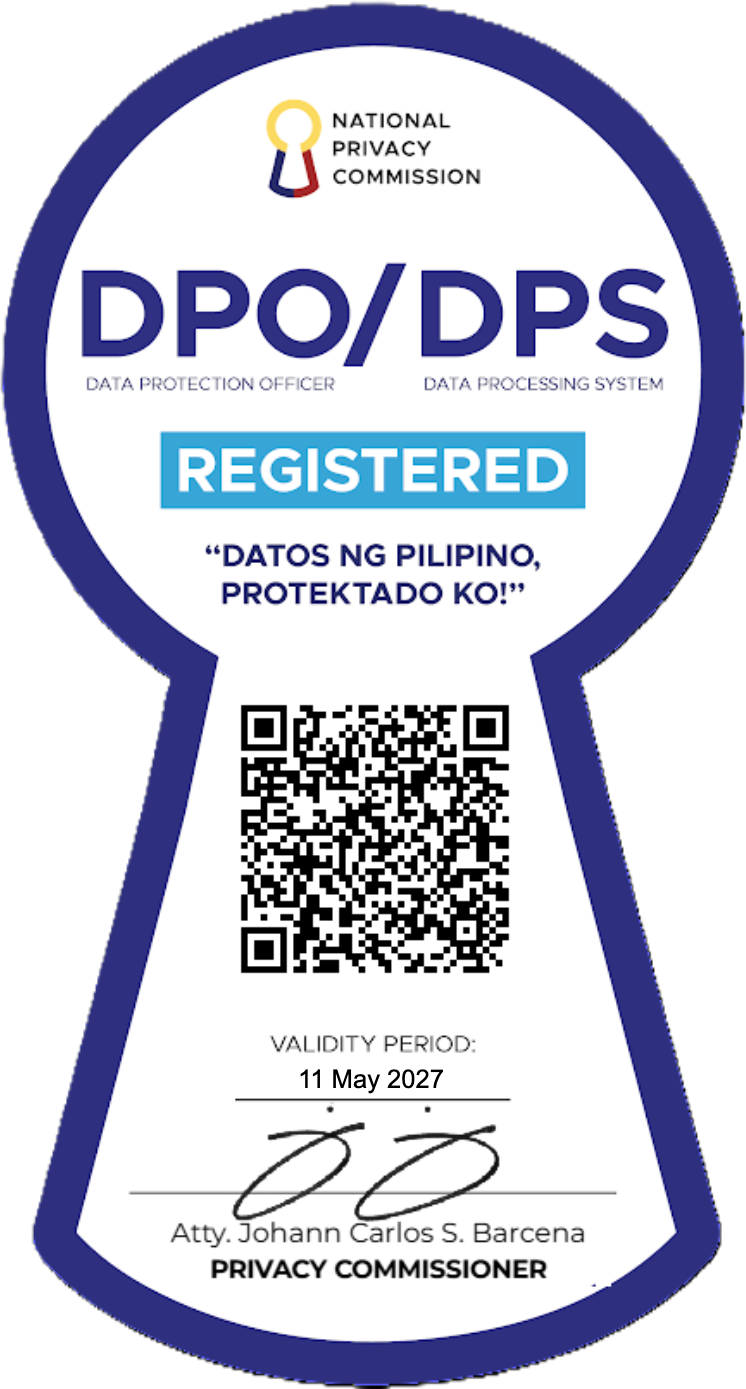
National Privacy Commission Registration
- Registered individual
- Jorge Dollisen (Individual Professional)
- Registration status
- Approved
- Registered data processing system
- MAX AI Companion Mobile Application and Supporting Cloud Services
- NPC Registration No.
- IND-001-236-2026
- Valid until
- Data Protection Officer
- Jorge Dollisen
- DPO email
- privacy@maxaicompanion.com
Changes to This Policy
We may update this Privacy Policy from time to time. Changes will be posted within the app with an updated effective date. Continued use of MAX after changes are posted constitutes acceptance of the updated policy.
Contact
For privacy inquiries or to exercise your data rights, contact Jorge Dollisen, Data Protection Officer, at privacy@maxaicompanion.com.
Dexter Enriquez is the current personal information controller for MAX AI Companion until a legal entity is formed or another controller is formally designated.